Choosing the right baseball or softball glove is about more than age. The competition a player participates in, their hand size, playing position and ability to close the glove all matter. This guide uses familiar Australian junior baseball competitions to help you choose a suitable glove.
Important: The ages and glove sizes below are general shopping recommendations, not competition eligibility rules. Local associations may use different age groups. A glove that fits comfortably and can be closed easily is usually a better choice than an oversized glove.
| Competition | Typical ages | Suggested glove size | What to look for |
|---|---|---|---|
| Tee Ball | 4-7 | 9-10.5 inches | Lightweight, flexible youth glove |
| Zooka / Coach Pitch | 7-10 | 10-11.5 inches | Soft youth glove with a manageable pocket |
| Little League Minor | 8-11 | 10.5-11.75 inches | Youth fit, easy closing |
| Little League Major | 9-12 | 10.5-12 inches | Consider position and hand fit |
| Intermediate | 11-13 | 11-12.5 inches | Position and hand size become important |
| Junior League | 12-14 | 11-12.5 inches | Consider position-specific models |
| Senior League | 13-16 | 11.25-12.75 inches | Usually selected by position |
| Adult Baseball | 16+ | 11.25-12.75 inches | Fit and position determine size |
These are approximate age bands and fielding-glove recommendations. Catcher's mitts and first base mitts have different sizing considerations. There is no single correct glove size for every player of the same age.
Young Tee Ball players benefit from a small, lightweight glove that they can close without struggling. A 9-10.5 inch glove is a sensible starting point. Avoid choosing a large glove simply to allow room to grow: extra length and stiffness can make catching more difficult. Shop Tee Ball gloves .
As players move into Zooka or Coach Pitch, a 10-11.5 inch youth glove will suit many players. The glove should still be flexible, with a wrist opening and finger stalls designed for smaller hands. Explore youth gloves .
One of the biggest challenges for young baseball and softball players is learning to close their glove around the ball. Children often lack the hand strength needed to close a traditional leather glove, particularly when it is new and hasn't been broken in.
A glove that is too stiff can make catching unnecessarily difficult. Even when the ball enters the pocket, a young player may struggle to close the glove quickly enough to secure it.
Fortunately, some manufacturers have developed gloves specifically to address this problem. Two examples are the Rawlings Sure Catch and Mizuno Prospect PowerClose ranges.
The Rawlings Sure Catch range is designed for younger players who are learning the fundamentals of catching and fielding.
The standout feature is the Sure Catch heel cutout, a specially designed section at the base of the glove that reduces resistance when closing it. This allows young players to close the glove more easily, even if they haven't yet developed much hand strength.
The Sure Catch range also features soft leather construction, comfortable finger linings and a youth-specific fit. Many models include an adjustable wrist strap to help keep the glove secure on smaller hands.
These features make Rawlings Sure Catch gloves an excellent choice for children playing Tee Ball, Zooka or Coach Pitch, as well as younger Little League players.
Shop Sure Catch Baseball Gloves
Mizuno's Prospect PowerClose range takes a similar approach, focusing on making catching easier for developing players.
PowerClose technology is designed to reduce the effort required to close the glove. The flexible construction works with the natural closing movement of the hand, allowing younger players to secure the ball more easily.
Selected Prospect models also incorporate a thumb cut and modified web lacing to improve flexibility around the glove's closing points.
Combined with a comfortable youth fit, these features make Mizuno Prospect PowerClose gloves particularly suitable for Tee Ball, Zooka, Coach Pitch and younger Little League players.
Shop Mizuno Prospect Power Close Baseball Gloves
For young players, the ability to close a glove properly is often more important than the quality or grade of leather.
A premium glove may offer excellent durability and performance for an experienced player, but if a young child cannot close it, the glove may actually make learning to catch more difficult.
When choosing a glove for a beginner, we recommend looking for:
A glove that fits the player's hand comfortably.
A soft, flexible construction that is easy to close.
A size appropriate for the player's age and competition.
A glove that is light enough for the player to control confidently.
Our advice: For children starting Tee Ball or progressing into Zooka, choose a glove they can comfortably open and close rather than buying a larger or more expensive model for them to grow into.
Both the Rawlings Sure Catch and Mizuno Prospect PowerClose ranges are good examples of gloves designed with this principle in mind.
Players at these levels may start to develop preferences for infield and outfield. A smaller glove can make transferring the ball quicker, while a slightly longer glove provides extra reach. Fit and ease of use should still come before a position-specific design. Explore premium youth gloves .
For older junior players, position becomes increasingly important. Infielders generally prefer shorter gloves, while outfielders tend to choose longer models with deeper pockets. Some players will be ready for adult-pattern gloves; others will still benefit from a narrower youth fit.
| Position | Typical older-youth/adult size | Why |
|---|---|---|
| Second base | 11-11.5 inches | Fast ball transfers |
| Shortstop | 11.25-11.75 inches | Balance of control and reach |
| Third base | 11.5-12 inches | More catching area for hard-hit balls |
| Pitcher | 11.5-12.5 inches | Often a closed web to conceal grip |
| Outfield | 12-12.75 inches | Extra reach and deeper pocket |
| Utility | 11.5-12 inches | Versatile across positions |
These ranges are primarily for older youth and adult players. Younger players should use a glove that fits their hand even if the size is outside the range shown for their position.
Softballs are larger than baseballs, so softball gloves typically have larger pockets. For junior players, however, ease of closing and appropriate hand fit remain essential.
| Playing level | Approximate age | Suggested glove size |
|---|---|---|
| Junior beginner | 5-8 | 9.5-11 inches |
| Junior softball | 8-12 | 11-12 inches |
| Youth fastpitch | 12-15 | 11.5-12.5 inches |
| Senior fastpitch infield | 15+ | 11.5-12.5 inches |
| Senior fastpitch outfield | 15+ | 12.5-14 inches |
| Senior fastpitch pitcher | 15+ | 12-12.5 inches |
Fastpitch gloves are often designed with a narrower hand opening and finger stalls. Shop softball gloves .
Learning to catch is one of the most important skills for young softball players. Having a glove that fits comfortably and is easy to close can make a significant difference to their confidence and enjoyment of the game.
One of the biggest challenges for beginners is developing the hand strength and coordination needed to close their glove around the ball. A glove that is too large or too stiff can make catching unnecessarily difficult, even when the player is using the correct technique.
Fortunately, several manufacturers offer junior softball gloves specifically designed to make catching easier. The Rawlings Sure Catch Softball, Mizuno Finch Prospect PowerClose and Wilson Flash ranges are excellent examples.
The Rawlings Sure Catch Softball range is designed for younger players learning the fundamentals of catching and fielding.
Its standout feature is the Sure Catch heel cutout, which reduces resistance when closing the glove. This helps young players close the glove more easily and secure the ball in the pocket.
The soft leather shell, cushioned finger linings and adjustable wrist strap provide a comfortable fit for smaller hands.
The Sure Catch Softball is an excellent option for beginners and developing junior players who need a glove that is flexible, comfortable and easy to control.
Shop Rawlings Sure Catch Softball Gloves
The Mizuno Finch Prospect PowerClose range is designed specifically for young softball players, with an emphasis on comfort, flexibility and ease of closing.
Developed as part of Mizuno's Jennie Finch range, these gloves incorporate PowerClose technology, which helps younger players close the glove around the ball with less effort.
The flexible construction and youth-friendly fit make the Finch Prospect PowerClose particularly suitable for players developing their catching and fielding skills.
Shop Mizuno Prospect Softball Gloves
The Wilson Flash range is designed for young softball players who need a lightweight, flexible glove that is easy to use.
Its EZ-Snap Close design helps reduce the effort required to close the glove, making it easier for developing players to secure the ball.
The lightweight mesh back provides comfort and flexibility, while the adjustable wrist strap helps achieve a secure fit on smaller hands.
The Wilson Flash is a good choice for beginners looking for a comfortable, easy-to-close softball glove.
Shop Wilson Flash Softball Gloves
All three ranges are designed to help young softball players develop confidence and improve their catching skills.
| Glove Range | Key Feature | Best Suited To |
|---|---|---|
| Rawlings Sure Catch Softball | Sure Catch heel cutout and soft leather construction | Beginners wanting an easy-close leather glove |
| Mizuno Finch Prospect PowerClose | PowerClose technology and youth-specific fit | Young players developing their catching skills |
| Wilson Flash | EZ-Snap Close design and lightweight mesh back | Beginners wanting a lightweight, flexible glove |
Our advice: When choosing a glove for a young softball player, focus on fit, flexibility and ease of closing rather than simply choosing a larger or more expensive glove.
A glove that a player can comfortably control and close will help them develop sound catching techniques and build confidence as they progress through junior softball.
For a standard fielding glove, the advertised size is measured along the glove from the heel to the tip of the index finger. It is not the length of the player's hand. Two gloves with the same advertised size may fit differently because of their wrist opening, finger stalls, padding and leather construction.
Youth gloves generally have smaller hand openings and finger stalls and often use softer, lighter materials. An 11.5-inch youth glove can be much easier for a child to use than an 11.5-inch adult glove. Check that the player can control and close the glove rather than relying on its advertised length alone.
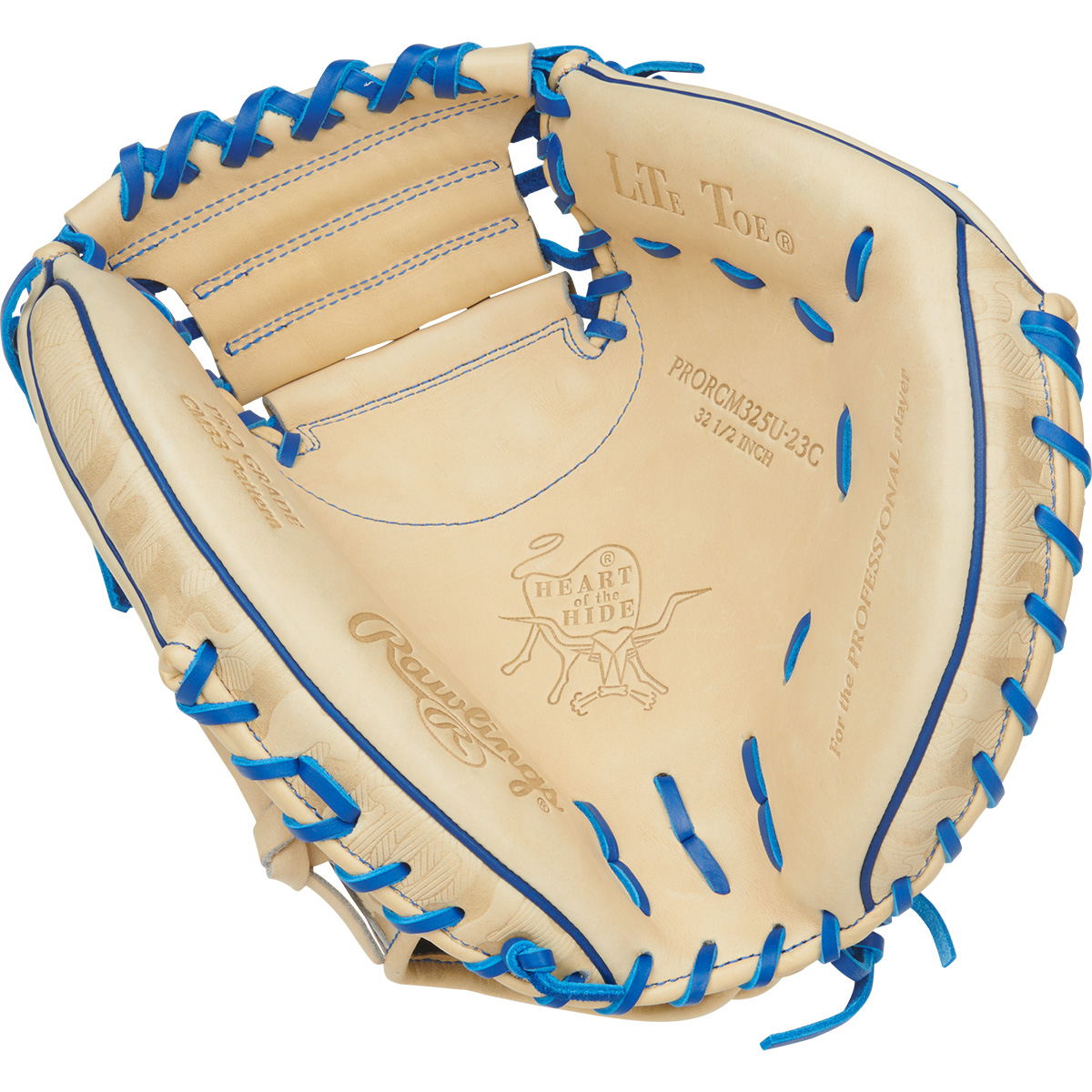
Catcher's mitts are measured by circumference rather than the heel-to-finger length used for fielding gloves. Youth baseball catcher's mitts often start around 31-32.5 inches, with older youth and adult models commonly around 32.5-34 inches. Softball catcher's mitts also commonly fall in the 33-34 inch range. Shop baseball catcher's mitts .
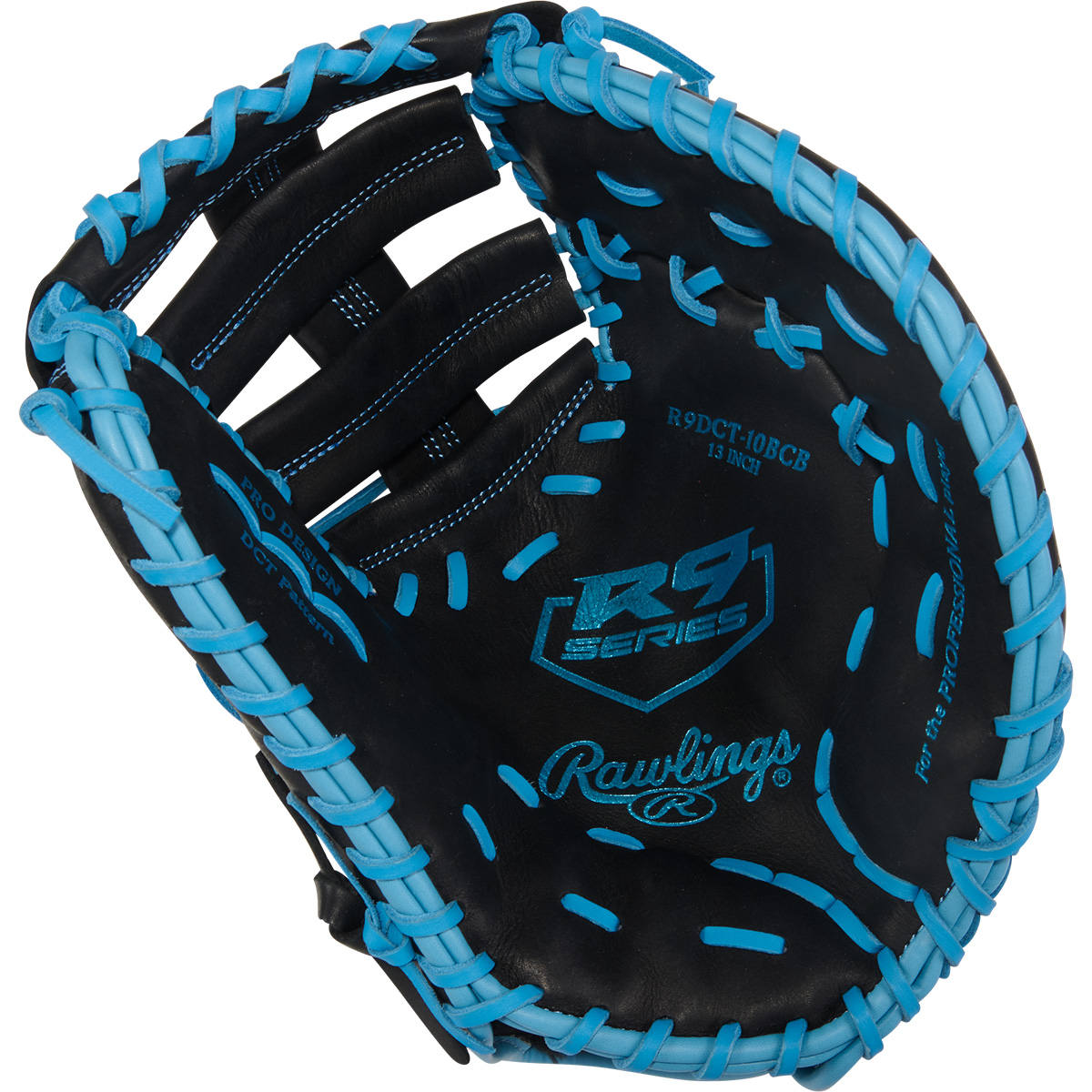
First base mitts have a long catching edge and a deeper pocket to help receive throws and scoop balls. Youth models are often around 11.5-12.5 inches; adult models are commonly around 12-13 inches. Choose based on fit as well as length. Shop first base mitts
Entry-level synthetic or soft leather gloves can be a good choice for Tee Ball and younger players because they are light and easy to close. More structured leather gloves may suit developing players who train and play regularly. Premium leather gloves often offer durability and shape retention, but can require more break-in time. For a child, a glove that can be used confidently now is usually better than a stiff premium glove that is difficult to close.
Read our article on Glove Leather Types
Players who throw right-handed wear the glove on their left hand (RHT). Players who throw left-handed wear the glove on their right hand (LHT). Check the throwing-hand designation when ordering.
A seven-year-old playing Tee Ball may be comfortable with a 9.5-10.5 inch glove. A player moving into Zooka or Coach Pitch might prefer a 10-11 inch youth glove. The player's hand size and ability to close the glove matter more than age alone.
Usually not. A glove that is too large or stiff can make catching and fielding harder. Choose a glove that fits and works well now.
Some younger players can, provided the pocket accommodates the ball and the glove fits. Older softball players usually benefit from a softball-specific glove with a deeper pocket.
Not necessarily. Comfort, fit, control and appropriate flexibility are more important than price, particularly for younger players.
Need help choosing? Browse our full glove range or contact Red Stitches for advice on a glove that suits your competition and playing level.